Gift card scams: how to spot them, and what to do if you already paid
A call, text, email or social media message says you must pay right now, with a gift card. The FTC says that's a scam, whatever the story. How the stories go, how to check a card on the rack, who to contact if you already paid, and what official sources say about getting the money back.
Short answer
Yes, it's a scam. The FTC says no real business or government agency will tell you to pay them with a gift card. If you already paid, contact the company that issued the card right away, ask for a refund, and report it at ReportFraud.ftc.gov. The money may be gone, but some companies might return it.
Someone calls, texts, emails or messages you on social media to say you must pay right now, and it has to be a gift card. The Federal Trade Commission's view is simple: whatever the story, that's a scam. Here's how to recognize it, how to check a card before you buy one this season, and what to do if you already paid.
Is it a scam if someone asks you to pay with a gift card?
Yes. The FTC says only scammers will tell you to buy a gift card and give them the numbers off the back, and that no real business or government agency will tell you to buy one to pay them. Apple says its cards can't pay bills or government fees, and Google says Play cards shouldn't be used for taxes or bail.
The numbers are all a scammer needs. The FTC says the card number and PIN let them take the money you loaded, even while you still hold the card, so don't share the numbers or send a photo of the card.
What are the warning signs?
The FTC lists these common tactics. Its advice: slow down, don't pay, and hang up.
- Urgency: pay now or something terrible will happen.
- Exact instructions: which card to buy and where, sometimes at several stores, possibly with the caller staying on the phone while you shop.
- A demand for the card number and PIN, or a photo of the card.
What stories do gift card scammers tell?
The FTC says scammers will say almost anything. Common stories include:
- The government. They claim to be from the IRS, the Social Security Administration or even the FTC and say you owe taxes or a fine. The FTC says agencies never demand payment by gift card.
- Tech support. They say they're from Microsoft or Apple, that your computer has a problem, and that you must pay to fix it. They also ask for remote access, which the FTC says not to give.
- Your boss. An unexpected text, email or call asks for an "urgent favor": buy gift cards and send the numbers. They might ask for "Google certificates," which the FTC says means gift cards. Check with your boss using a number or email you know is real.
- A friend or relative in trouble. They want money right away and ask you not to tell anyone. The FTC says voice cloning can make them sound like your loved one, so contact that person yourself.
- A prize. You've supposedly won, but must first pay fees with a gift card.
- A romance. Someone from a dating site makes up a story to get you to buy cards. The FTC says not to send money or gifts to someone you haven't met face to face.
How can I tell if a gift card on the rack was tampered with?
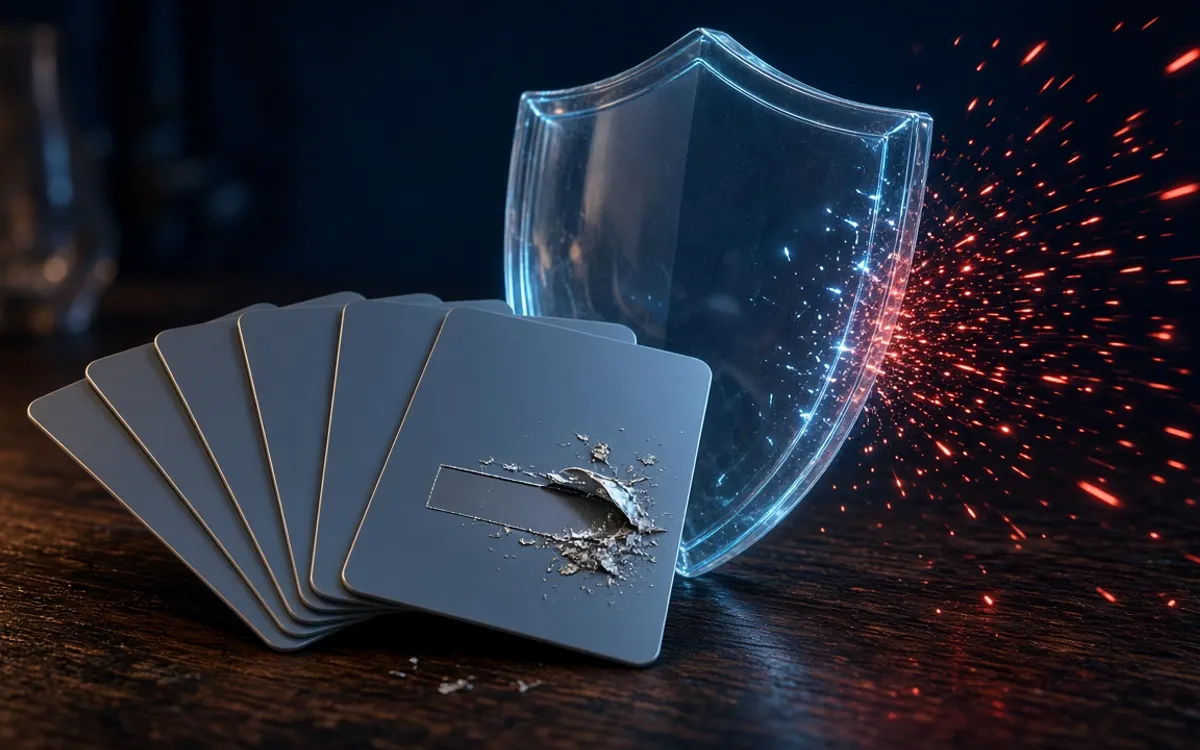
Not every gift card scam starts with a message. The FTC warned in a December 2024 holiday alert that scammers sometimes tamper with cards in store displays, removing protective stickers or scratching off the back to get the number and PIN. Then they wait for someone to load money on the card. Target and California's attorney general call this gift card draining. New York's Division of Consumer Protection also describes fake barcodes placed over real ones.
What should I check before I buy?
- The back. The FTC says the protective stickers should be there and look untouched, and the PIN shouldn't be showing.
- The packaging. Target lists torn or cut edges, excessive glue residue, and tears or stretching on holograms or stickers as signs of tampering. Amazon says not to buy a card that looks opened or resealed.
- The barcode. New York's consumer protection division says to confirm it's original to the packaging and doesn't peel off, and that the receipt and barcode match the package.
- The store. The FTC says to stick to stores you know and trust and avoid online auction sites. Illinois's attorney general suggests buying from behind a counter or from a retailer.
- Your payment and records. The FTC says to pay by credit card if you can, since a chargeback might get your money back, and to keep a photo of the card and receipt.
What if a card looks wrong or turns up empty?
Pick another card and show the suspicious one to a cashier or manager. The FTC says scammers might tamper with cards in batches, so consider a different store. If a card you bought turns up empty, report it to the card company. California's attorney general says to ask for a freeze and request a refund. Target says to check its card balances only on its own site, because scammers pose as balance-check services.
I gave a scammer the numbers. What do I do now?
Act quickly, and don't buy more cards or share more numbers. The FTC's steps:
- Contact the company that issued the card right away, using the number on the back of the card or the contacts below. The FTC says to report it no matter how long ago it happened.
- Tell them a scammer tricked you into giving them the card number and PIN, and ask for a refund. Ask too whether money is still on the card and can be frozen. The FTC's list says Apple and Google can put a freeze on remaining money, though neither company's own scam page mentions it.
- Keep the card and the receipt, if you have them. The FTC says you may need them to follow up on your claim.
- Report it to the FTC at ReportFraud.ftc.gov.
How do I reach the gift card company?
- Apple: call 800-275-2273 (U.S.) and say "gift cards" when prompted.
- Google Play: go to support.google.com/googleplay/answer/9057338 and follow the link to report it. Without a Google Account, go to support.google.com/googleplay/contact/gc_scam_report and fill out the form. Both are linked under Sources.
- Amazon: Amazon's help page says to use its Contact Us page, www.amazon.com/gp/help/customer/contact-us, and to sign in or create an account. The FTC's list also gives 1 (888) 280-4331.
- Target: call 1-800-544-2943.
- Walmart: call (888) 537-5503.
These come from each company's own page, except Amazon's phone number, which is from the FTC's list. We checked them on November 2, 2026. The FTC lists more companies at ftc.gov/giftcards.
If your card isn't on the FTC's list, it says to look for contact details on the card itself or research online. If you can't find contact details, or the company won't talk to you, the FTC says to report it to the FTC. Take care with search results: Amazon warns that a search can turn up fake Amazon numbers.
Can I get my money back?
Possibly, but don't count on it. The FTC says your money "might be gone already," yet it's worth asking, because some companies are helping stop gift card scams and might return it. It also says the sooner you report, the better your chance.
Other official pages are more cautious. Apple warns that the funds might be spent before you can reach it or law enforcement. New Jersey's cybersecurity agency said in December 2023 that victims typically can't recover the money, even if they used a credit card, because the victim initiated the transaction. Google's help page says Play gift cards are non-refundable unless required by law, and its report form asks for a picture of the card and says it can't process a request without one, and that it might not be able to help without a receipt.
If you also gave them personal information or access to your computer, the FTC's What To Do if You Were Scammed page has separate steps.
Where else should I report a gift card scam?
- The FTC, at ReportFraud.ftc.gov, or by phone at 877-382-4357 if you can't use the site.
- Your state attorney general or local consumer protection agency, which the FTC says you can also report to.
- Local police. Google and Walmart both tell scam victims to report to local police or law enforcement.
- The FBI's Internet Crime Complaint Center, at www.ic3.gov. If you're 60 or older, the Elder Fraud Hotline can help with filing: (833) FRAUD-11 or (833) 372-8311, Monday through Friday, 10:00 a.m. to 6:00 p.m. ET.
A report isn't a refund claim. The FTC says it can't resolve reports on behalf of individuals, but it uses them to bring cases and shares them with more than 2,000 law enforcement partners.
How much do people report losing when they pay by gift card?
The FTC's Consumer Sentinel dashboard, published July 28, 2026 with data as of June 30, 2026, shows these reported figures:
| Period | Reports | Reported losses |
|---|---|---|
| 2024 | 41,122 | $212.0 million |
| 2025 | 35,321 | $233.4 million |
| January to June 2026 | 20,383 | $154.1 million |
The dashboard counts gift cards and reload cards together, and it covers only reports that named a payment method: 18% of fraud reports in 2025 and 21% in the first half of 2026. The FTC says that, due to a lapse in funding, it didn't take reports from consumers from October 1 to November 13, 2025. That means the 2025 figures may run lower than they otherwise would, so use care when comparing 2025 with other years.
Someone says they can get my money back. Should I trust them?
Be careful. In an August 3, 2026 alert, the FTC warned that refund and recovery scammers buy lists of people who've already been scammed, then offer to recover their money. They may pose as a law firm, a consumer advocacy group or a government agency, even the FTC, and ask for a "retainer fee," "processing fee" or "administrative charge," or for your financial information.
The FTC's advice: never pay up front for a refund or for help getting one. It says neither government agencies nor legitimate organizations will ask for money or financial information to help you get a refund, or guarantee you'll get your money back. Look up an agency's number yourself instead of using one they give you, and report these offers to the FTC and your state attorney general.
Frequently asked questions
I bought the gift card with a credit card. Can I dispute the charge?
The scam happened months ago. Is it too late to report it?
Will the FTC get my money back?
Can I report a gift card scam for my parent?
Sources · checked Nov 2, 2026
- FTC Consumer Advice — Avoiding and Reporting Gift Card Scams (July 2023)
- FTC Consumer Advice — What To Do if You Were Scammed (June 2026)
- FTC Consumer Advice — Refund and Recovery Scams (December 2023)
- FTC Consumer Alert — Check out gift cards before you buy them (December 19, 2024)
- FTC Consumer Alert — No, that's not your boss asking you to buy gift cards (January 28, 2026)
- FTC Consumer Alert — Have you lost money to a scam? Watch for scammers who say they can help (August 3, 2026)
- FTC ReportFraud.ftc.gov — Frequently Asked Questions
- FTC Consumer Sentinel Network — Fraud Reports dashboard, Payment & Contact Methods (published July 28, 2026; data as of June 30, 2026)
- FTC Consumer Sentinel Network — Fraud Reports dashboard, Trends Over Time (note on the 2025 lapse in funding)
- FBI Internet Crime Complaint Center (IC3) — Elder Fraud
- California Attorney General — Ahead of the Holiday Season, Attorney General Bonta Warns Consumers of Shopping Scams and Fraud (November 26, 2024)
- Illinois Attorney General — Consumer Alert: Attorney General Raoul urges consumers to do their holiday shopping with caution (November 26, 2025)
- New York Department of State — Consumer Alert: NYS Department of State's Division of Consumer Protection Reminds New Yorkers How to Avoid Losing Money with Gift Cards and Gift Certificates this Holiday Season (December 19, 2023)
- New Jersey Cybersecurity & Communications Integration Cell (NJCCIC) — Beware of Gift Card Scams (December 6, 2023)
- Apple Support — About gift card scams (June 24, 2026)
- Google Play Help — What to do if you're a victim of a Google Play gift card scam
- Google Play Help — Report Google Play Gift Card Scam (form)
- Amazon Customer Service — Common Gift Card Scams
- Amazon — Gift Card Scams
- Target — Gift Card Fraud Prevention
- Target — Security concerns (Contact Us)
- Walmart — Fraud Alerts
PrivacyTechReview Editorial Team
Editorial
Our editorial team researches consumer security products using public vendor documentation and independent laboratory reporting.